
Duotone Spike SLS and Spike Concept Blue 2026: more days on the water, no excuses
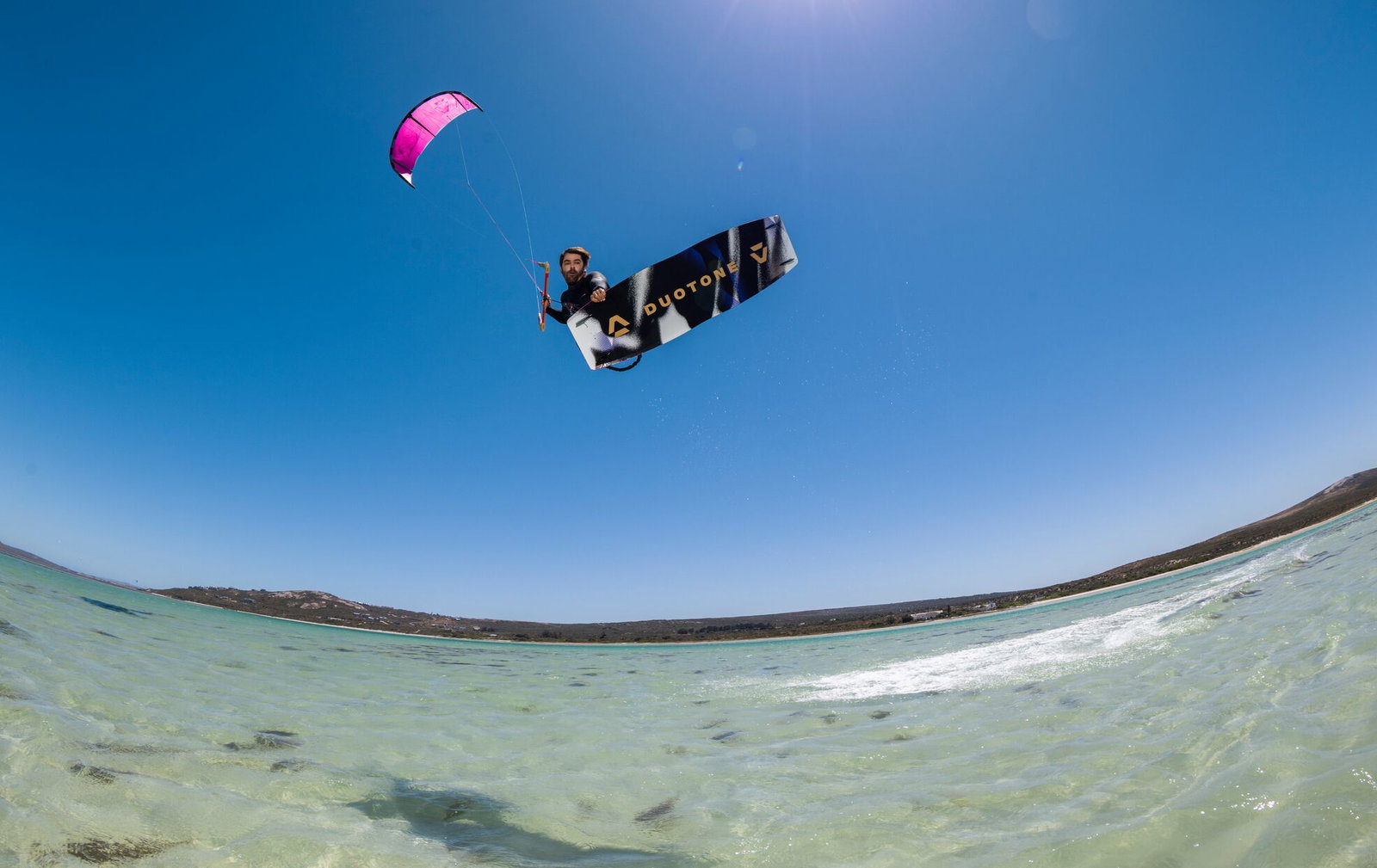
There are days when the wind just doesn't show up. And there are boards that turn those days into real sessions. The new Duotone Spike SLS 2026 and the Spike Concept Blue 2026 are exactly that: light-wind boards that make no apologies for being so. The outline is completely new, the construction has changed, and so has the feel on the water. Duotone hasn't done a cosmetic update — it has redesigned the shape from scratch and put two different constructions on the same base so each rider can choose the one that makes sense for them.
What has really changed
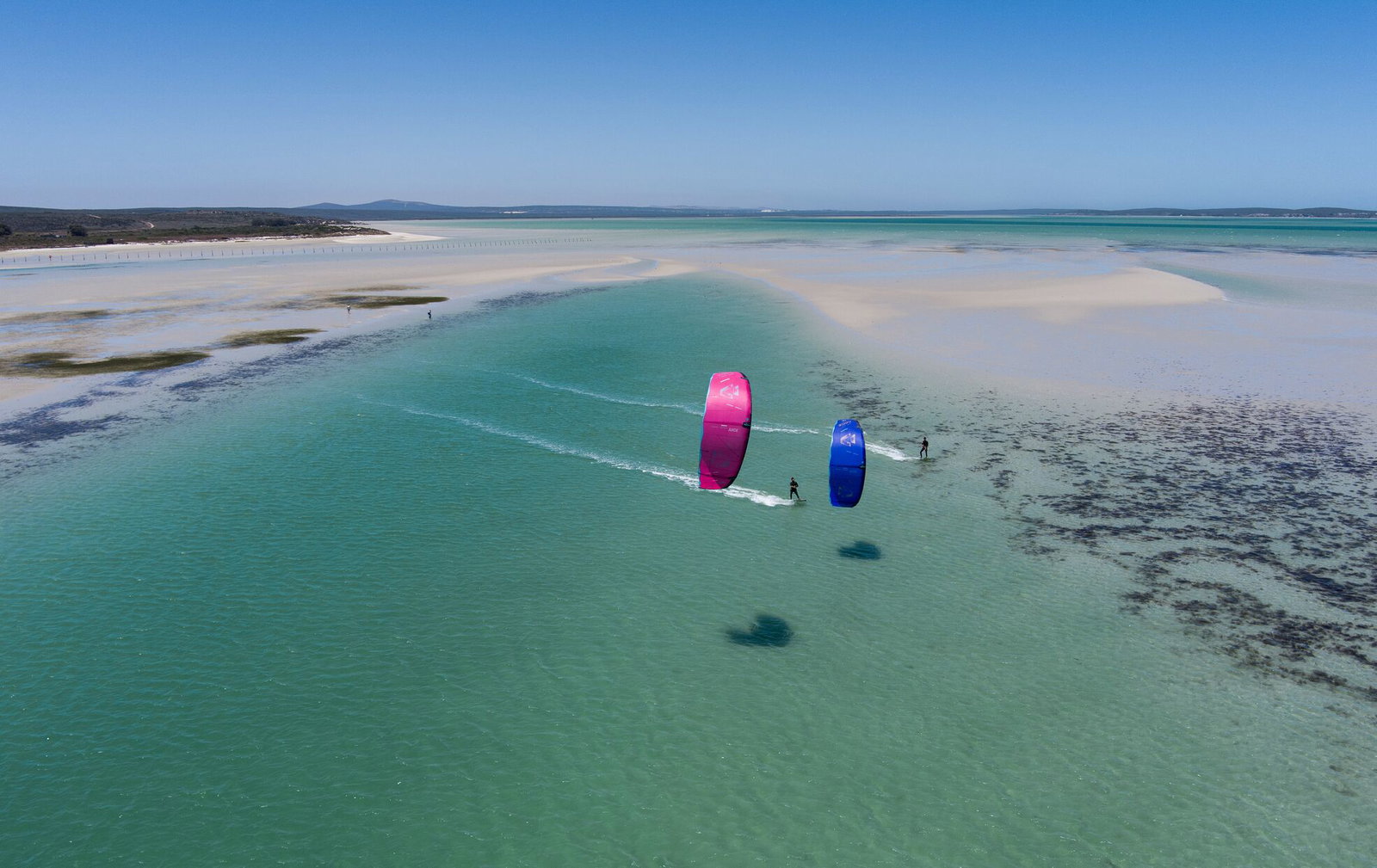
The most obvious change on the Spike 2026 is its outline. It's not a minor revision — it's a complete redesign aimed at improving two specific things: early planing and upwind control. The extra width in the nose area gets you planing sooner, without having to wait for the wind to settle. On 12-14 knot days, that makes the difference between getting on the water or staying on the shore watching the water move without you.
The Flat Rocker — that is, the board's flat curvature line — is the heart of the concept. A board with a flat rocker has less hydrodynamic resistance as it moves forward: that translates into more planing speed with less wind and more efficient gliding when the wind drops between gusts. It's not magic — it's geometry. The practical result is a board that doesn't stall when conditions are marginal, keeps its momentum in the lulls and lets you ride in those breezes you would have written off before.
The Angled Rails are another detail worth understanding. On a light-wind board, the angled rail works actively to gain ground upwind. With little wind, you need every metre of height possible so you don't end up stranded downwind. With this type of rail, the board cuts through the water more efficiently at the upwind angle — you can hold your ground even when the wind suddenly drops, something that becomes a constant struggle on a standard freeride board.
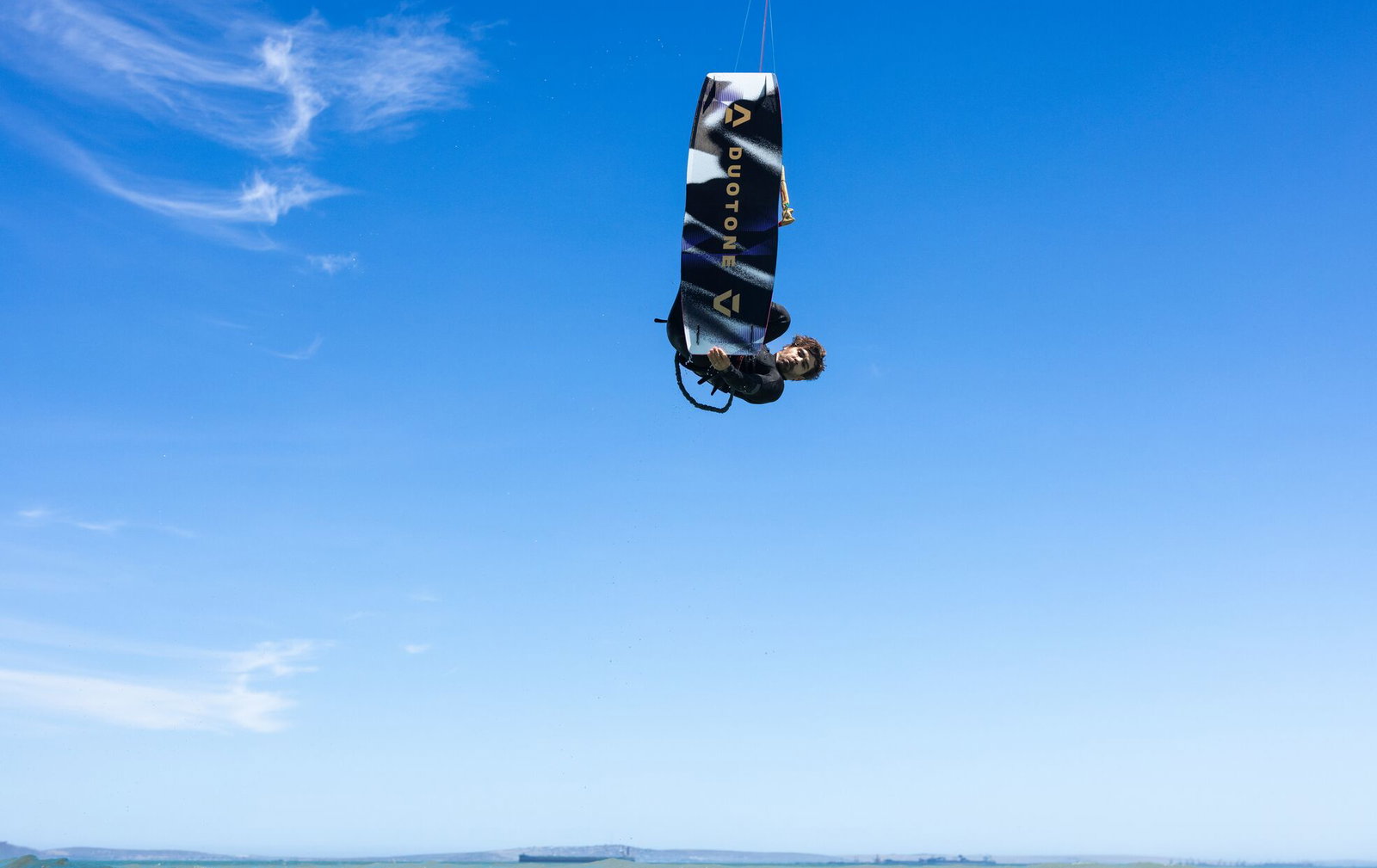
When it comes to construction, this is where the Spike becomes two different boards with the same soul. The Spike SLS uses a combination of Textreme Innegra and Biax Carbon. Textreme Innegra is a composite fibre that combines impact resistance with extreme lightness: it takes knocks and torsion without adding dead weight. Biax Carbon adds stiffness in the rails, where you need direct response — especially on the pop and in rail changes. The result is a board that weighs just 3.44 kg in the 153 and 3.67 kg in the 164. You feel that on the water from the very first start.
The Spike Concept Blue has exactly the same outline, the same rocker and the same rail geometry, but swaps the material for flax fibre (Flax Fiber) and basalt (Basalt). Flax fibre naturally absorbs vibration, making the board somewhat more damped in chop — a subtle but real difference in choppy conditions. Basalt is a volcanic material with a very good stiffness-to-weight ratio, and in this application it acts as structural reinforcement. The result is a slightly heavier board (3.55 kg for the 153) but with a more damped, softer feel. And, no less important, at €789 compared with €1,199 for the SLS: a difference of €410 for the same shape and the same performance on the water.
Reno Romeu, Duotone team rider, describes it like this: "The Spike SLS is all about maximising light-wind performance. Very early planing, fast acceleration and effortless riding — but with plenty of pop and precision for bigger jumps and clean tricks when you want to push it." That's exactly the summary of what this board does: efficient when the wind fades, with character when the wind decides to show up.
Who is it for?
If someone walked into the shop and asked me "what rider is this board for?", the answer would be straightforward: for almost everyone who doesn't want to miss a session for lack of wind. The Spike is freeride at heart, with a dose of freestyle DNA that lets you do things when the wind decides to cooperate a bit more. The medium flex confirms it: it's not a competition board with an extreme response, but a tool that forgives mistakes and rewards you with consistency.
For the rider who already has a board for medium-to-strong conditions in the quiver and is missing something for 12-16 knot days, the Spike fits perfectly. Also for those who are starting out and want a board that gets them planing quickly, without being punished for every failed start. The volume and width do the work for you on starts — especially useful when your water start timing isn't fully automatic yet.
For those looking for an aggressive board, with competition response or designed for intense unhooking, the Spike isn't the best option in the Duotone range. There are other models for that. But for the 80% of riders who go out once or twice a week and want to maximise the number of possible days, the Spike is a very sensible purchase. The choice between SLS and Concept Blue is, deep down, a question of budget and feel: if you jump a lot and value lightness and direct response, the SLS; if you want good performance with more damping and at lower cost, the Concept Blue does exactly the same on the water.
At PopKite
When someone comes to PopKite looking for a light-wind board, the first thing we do is understand how they ride: their level, their weight, whether they already have other boards in the quiver, and what the wind is like where they usually ride. The Spike isn't the same for everyone — the 153 and 164 sizes have different profiles, and choosing well can make a big difference to your experience. A rider under 70 kg who goes out in 12-14 knots we'd steer towards the 153 to keep manoeuvrability; for heavier riders or winds that rarely go above 12 knots, the 164 is the one that will really get them planing without having to fight the kite.
One of the things we value most is being able to put the gear on the water before you buy it. With the Spike this is especially useful because the feeling of that first smooth start onto the plane is very different from what you imagine looking at the board in the shop. We have test gear available so you can try before you decide — not on land, not in a simulator, on real water with real wind. It's the only honest way to know if a light-wind board works for you.
If you're torn between the SLS and the Concept Blue, we'll explain it in person and go through it with you. Some things can't be settled by reading a spec sheet. The difference in feel between a carbon layup and a natural-fibre one isn't something that's easily described in an email — but you notice it in the first few runs. If you want to understand which board suits the way you ride, drop by the shop or contact us with no obligation. We're not going to push you towards the more expensive option if the other one makes more sense for what you do.
Want to know which Spike size best suits your weight and riding style? Contact us and we'll advise you. Or take a look at our selection of twintip boards to see all the options available.
Source: Duotone Kiteboarding Newsletter – 29 March 2026