
How to choose your perfect wetsuit / Size guide
CONTENTS
- Wetsuit thickness
- How to take your measurements
- Wetsuit sizes
- POPKITE tips
- Frequently asked questions
How to choose your perfect wetsuit / Size guide
If you are passionate about surfing, you will know how important it is to have the right gear to make the most of every session on the water. And one of the key elements is the wetsuit. In this blog, POPKITE will help you clear up your doubts and choose the perfect wetsuit and size for you.
A wetsuit is a garment that protects you from the cold and helps keep you warm while you surf. However, choosing the perfect wetsuit can be a challenge, as there are many factors to consider: thickness, type of wetsuit and design, among others.
We will guide you through the different types of wetsuit and the factors to consider when choosing one, and give you some tips to look after it and keep it in top condition.
Wetsuit thickness
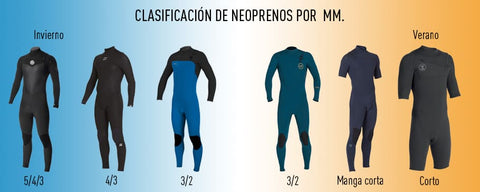
The first thing to consider when buying a wetsuit is choosing its thickness. A wetsuit is our second skin and has to be our ally against the cold.
A wetsuit's name always comes with numbers such as 3/2, 4/3, 5/4... these numbers indicate the thickness of the neoprene. The smaller number is always the thickness in the areas with more movement, such as the arms and legs, and the larger number is always the thickness in the areas with less movement, such as the chest and back.
Depending on the water temperature we will need more or less neoprene. Here is a guide you can use as a reference to choose your wetsuit by thickness:
5ºC or less - 6/5
8ºC to 6ºC - 5
12ºC to 9ºC - 5/4
14ºC to 13ºC - 4/3
18ºC to 15ºC - 3/2 or 2/2
21ºC to 23ºC or more - swimsuit
How to take your measurements
- Height: Measure your height barefoot, standing against a wall you can use as a reference.
- Chest: Measure around the widest part of your chest, 2 cm below the armpit.
- Waist: Measure around the narrowest part of your torso.
- Hips: Measure over the buttocks, at the widest part of the hips. Standing with your legs slightly apart gives a more accurate result.
- Thigh: Measure the widest part of your thigh.
- Arm: Bend your arm slightly and measure from the base of the neck to the elbow, then on to the wrist bones. We recommend getting someone to help you take these measurements.
- Leg: Measure from the crotch to the floor. You don't need to follow the shape of the leg; you can take the measurement vertically.
Wetsuit sizes
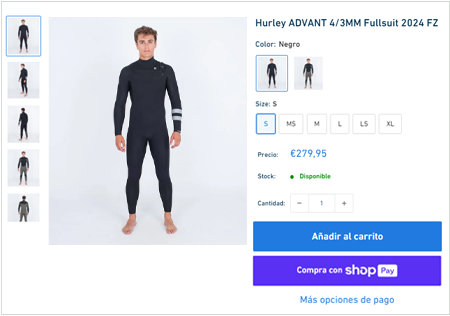
Hurley wetsuits
One of the wetsuit brands you will find in our shop is Hurley, one of the top brands on the market. To help you choose the best wetsuit for you, below we show you a size chart for Hurley wetsuits for men, women, boys and girls.
MEN'S SIZES
WOMEN'S SIZES
KIDS' SIZES
| SIZE | HEIGHT | WEIGHT (KG) | CHEST | WAIST |
|---|---|---|---|---|
| 8 | 132-140 | 27-34 | 66-71 | 56-61 |
| 10 | 140-147 | 34-41 | 71-76 | 61-66 |
| 12 | 147-155 | 41-48 | 74-79 | 64-69 |
| 14 | 155-166 | 48-54 | 79-84 | 66-71 |
| 16 | 163-170 | 54-61 | 84-89 | 69-71 |
ION Water wetsuits
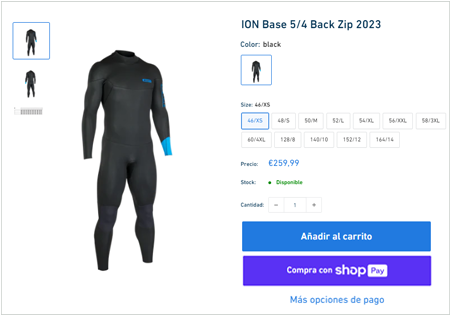
ION Water is another brand you will find in our shop, with a top product in the wetsuit market. Below is another chart to help you find the ION Water wetsuit that fits you best:
MEN'S SIZES
WOMEN'S SIZES
KIDS' SIZES
Billabong wetsuits
Billabong is one of today's leading brands, and that includes wetsuits. It offers different sizes for men, women and kids, which you will find in the following charts:
MEN'S SIZES
WOMEN'S SIZES
KIDS' SIZES

Tips to extend the life of your wetsuit
- How to put on a wetsuit easily: To put on a wetsuit without hassle, it helps to use a plastic bag over your feet and hands. That way the suit slides more easily over your skin and doesn't get stuck. It is also important to make sure the suit fits snugly to your body to stop water getting in.
- How to look after your wetsuit: It is important to wash your wetsuit after each use to remove salt and sand. We recommend using lukewarm water and a mild detergent. It is also best to dry it in the open air, away from direct sunlight. Never leave the wetsuit soaking, and never put it in the washing machine. For more information on how to extend the life of your wetsuit, click here.
- How to store your wetsuit: After washing and drying your wetsuit, it is important to store it properly. Ideally, hang it on a hanger in a dry place protected from direct sunlight. Never fold the wetsuit, as this can damage the material. If you are not going to use the suit for a while, we recommend keeping it in a breathable fabric bag to prevent moisture building up.
Frequently asked questions
How do I know my wetsuit size?
The best way to know your wetsuit size is to take your measurements and compare them with the manufacturer's size chart. Usually the chest, waist, hips and height are measured. It is important to follow the manufacturer's instructions to take the measurements correctly.
What if my size is not available?
If your size is not available, you may be able to find a similar size that fits your measurements. Remember that wetsuits should fit snugly to the body, but without being too tight. If you can't find your size, it's a good idea to check with the manufacturer or the shop to see if they can help you find an alternative.
What is the difference between a long-sleeve and a short-sleeve wetsuit?
A long-sleeve wetsuit covers the whole arm and provides more protection and warmth. A short-sleeve wetsuit, on the other hand, covers only the shoulders and torso, which makes it more suitable for warmer weather.
What wetsuit thickness should I choose?
The wetsuit thickness you should choose depends on the temperature of the water you are going to surf in. The colder the water, the thicker the wetsuit should be. Bear in mind that everyone is different and may have different levels of tolerance to the cold, so it is important to choose a thickness that suits your personal needs.