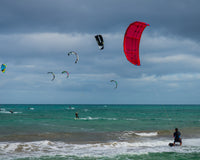

In winter the temperatures drop, but not our desire to do our favourite sport, kitesurfing. Many people think kiting is a summer sport, but you can also do it in winter, as long as you follow these tips for kitesurfing in winter.

CONTENTS
- Winter wetsuit
- Complete kit for kitesurfing in winter
- Tips to stay warm while kitesurfing
- The best time to kitesurf in winter
- How to protect yourself from the cold in water sports
As a general rule, water sports are associated with summer, but... what happens in winter? Those of us who love kiting can't wait every year for summer and the perfect temperature to get in the water. Kite competitions don't stop, and you end up wondering... what do the pros do to kitesurf when the temperature drops? We reveal the secrets and tips for kitesurfing in winter without dying in the attempt.
Winter wetsuit
The basic thing we do when it's cold is wrap up warm. In the water, however, they haven't invented jackets yet, but we have something better... winter wetsuits!
To choose a kitesurf wetsuit for winter riding we have to look at its thickness. To make sure you don't get cold, go for wetsuits that are 4/3 mm, 5/3 mm or 5/4 mm thick.
Kitesurf wetsuit thickness
Wetsuit thickness is measured in millimetres. The more millimetres thick the wetsuit, the better prepared it is for cold water. This doesn't mean we should buy the thickest suit, as the price goes up too. The thicker the suit, the more expensive it is (as a general rule). In our wetsuit shop you can find incredible offers and discounts on the best brands.
It's best to choose a wetsuit suited to the water temperature in your city or favourite spot during the winter. Below is a simple table to guide you when choosing a winter wetsuit for kitesurfing:
- 5/3 mm: For water temperatures between 8ºC - 10C
- 4/3 mm: For water temperatures between 10ºC - 12C
- 3/2 mm: For water temperatures between 12ºC - 14ºC
The best wetsuit brands
The wetsuit brand we should buy will depend on how much we do the sport.
We can't rank the best kitesurf wetsuits, as it is a very personal choice. Many variables come into choosing a wetsuit, such as design, value for money, looks, etc.

What we can talk about is numbers, and after many years the most in-demand suits are still those from Hurley, ION and Mystic
As a general rule we will recommend the suits with the highest quality and most features, that is, those that come with special finishes on the elbows and shoulders, thermal linings or inner seals.
Complete kit for kitesurfing in winter
Once we know which type and brand of wetsuit best suits our needs, we need to check whether we will need anything else to stay warm. It doesn't end there: we mustn't forget our extremities. Feet, hands and ears are the parts that usually suffer most from cold stress, to the point where we lose feeling. That is what winter accessories are for.
Accessories for our wetsuit are just as important as everything else, as our extremities are where we lose heat most easily.

Recommended winter accessories:
- A neoprene hood that closes down to the neck.
- Neoprene booties or boots with good grip.
- The right size and thickness of wetsuit.
- Neoprene gloves with good rubber to help us hold on well while riding.

After our first winter kitesurfing experience we will find out whether we need to add a thermal top under the wetsuit to keep the heat in. We can also add a windbreaker to help stop the wind getting through to the body.
We should also check all the elements of our kitesurf kit, especially the bar and its lines.
It is very important to look after our gear if we want it to do its job properly for a long time, so we recommend reading our blog posts on kitesurf gear maintenance and on washing our wetsuit correctly.

Tips to stay warm while kitesurfing
These are tips to bear in mind so you don't get cold in winter.
- A wetsuit at least 4/3 mm thick.
- The suit should be tight-fitting, snug like a latex glove.
- Wear gloves, booties and hoods.
- As a last resort, wear thermal clothing under the wetsuit.
- Protect your body with sun cream and Vaseline. Even though it's winter, it is a good idea to rub a little Vaseline on your face, cheeks, eyelids and nose to stop the cold and wind wreaking havoc on your face
Now you know some tips to stay warm while kitesurfing; all that's left is to put them into practice.

And after kitesurfing? There are a few home tricks that will help you avoid the odd cold.
- Fill several bottles with hot water at home, put them in a plastic supermarket bag and take them along with the rest of your kite gear. After your kitesurf session, take a bottle and pour it into your suit from the neck. The feeling is amazing! And, as if that weren't satisfying enough, the water will also make it easier to take your suit off.
- Get changed in the car; it will still be warm from the drive there.
- If you get changed outdoors, put your feet on a towel, dirty clothes, a mat or a pad. A fun fact: many people use a piece of artificial grass. It insulates very well from the cold, it's cheap and comfortable, and you don't get covered in sand 😉.
The best time to kitesurf in winter
To start our winter kite session we must make sure the place where we are going to kitesurf is suitable for the season. The best times to kite in the cold season are between 12:00 and 16:00. These are the warmest hours of the day, as we benefit from the heat of the sun. The recommendation is to keep to a session of 2 hours at most. It is important to listen to our body, so if we are tired or feel very cold we will need to stop the session or at least take a break 😄.
Another point to consider when kitesurfing in winter is the wind direction, which must be favourable and safe. We recommend checking the various wind forecast apps available.

How to protect yourself from the cold in water sports
Safety in kitesurfing is a must, and you can put the following tips for protecting yourself from the cold into practice in any water sport.
It is very important not to go too far from the shore, because if we have a mishap we need to be able to get out quickly, as the risk of hypothermia will be high if we have to wait to be rescued.
Before starting we must be ready to face the cold and what it does to our skin. It is very important to apply sun cream to our face, followed by a moisturiser or Vaseline so that the icy wind doesn't cause problems for our skin.
Once we have the suit on, it is important to start with a warm-up session to prepare our muscles and generate a bit of heat before facing the cold water.
Another good tip is to have hot drinks such as coffee, tea or hot chocolate before and after the session to keep warming our body from the inside.

Hot water always comes in handy! We recommend bringing bottles of hot water to pour over ourselves when we come out of the water, which will help us recover some heat. It will also help us take the suit off more easily.
If possible, get in the car to change at the start and end of each winter kitesurf session. If we choose to change outdoors, it's always good to do it on a mat so our feet don't get cold.
Once we have changed and recovered from the cold, we can start packing up the rest of the gear. You should wash your kitesurf gear as soon as possible so it is ready for our next winter kitesurf adventure.