
Today we're tackling an important topic: choosing the ideal kite size for the wind! If you're new to the sport and thinking about buying your first set of kites, it's completely normal to wonder which kite size is right for the wind you'll be riding in. With all the options available you might feel a bit confused, but don't worry! We're here to help you make the best decision.
Now, I know what you're thinking: "Is this topic just for beginners?" Absolutely not! Although this question is very common among those starting out, this blog is also a valuable resource for more experienced kitesurfers. So whether you're a newbie or a kitesurf veteran, keep reading and you'll find useful information to help you get the most out of your adventures on the water.
What kite size do I need for the wind?
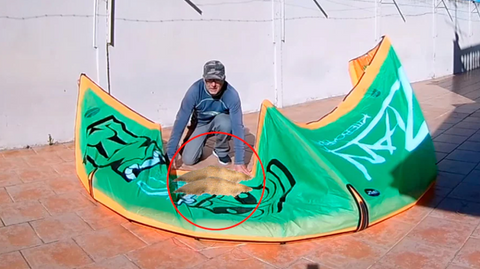
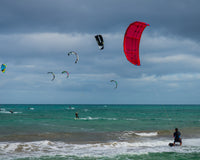
Let's talk kites and wind, my friend! Knowing the right kite size for the wind is crucial to enjoying kitesurfing to the full without any worries. Kites come in loads of different sizes, measured in square metres (m). There are 6 m, 7 m, 8 m, 9 m, 10 m, 11 m, 12 m, 13 m and 14 m kites and different types of kite to choose from: Freeride, wave, freestyle, light wind, wakestyle, foil kite and trainer kites.
To work out which suits you best, you need to take a few factors into account:
- The wind strength, measured in knots, and the gusts.
- Your weight, because we're not all the same.
- The kitesurf board you use, because yes, that matters too.
- Your style on the water: do you want to surf waves or fly high in the sky?
- The type of kite you have to hand; they're not all the same.
- And of course, the water currents at your favourite spot.
So there you go: adjust your choice of kite to these factors, and you'll be ready to enjoy kitesurfing with all the safety and fun you deserve. Let's fly! 🌬️🏄♂️
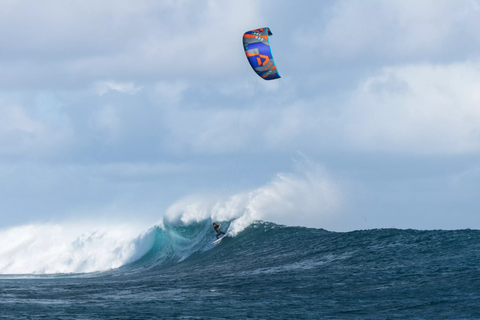
Kitesurf kite size chart
To give you a general idea of which kite size best suits your weight and the wind conditions, here's a rough guide:
Taking gusts into account:
Because yes, in places like the Netherlands, gusts are like surprise guests at a party. So it's a good idea to consider the maximum gust strength in knots when choosing your kite. That way you make sure you have the power you need, even when those gusts arrive without warning.
When there are no gusts:
Now, if the wind is a good one and doesn't play tricks on you with crazy gusts, you can think about going for a kite slightly bigger than the general guide suggests. That way you make the most of the conditions without worrying about sudden shifts in the wind.

Below are four charts showing the kite size you need depending on the wind:
- Wind force 4 (11-16 knots)
|
Kitesurfer's weight
|
Kite
|
|
120kg
|
14+m
|
|
110kg
|
14+m
|
|
100kg
|
14+m
|
|
90kg
|
14+m
|
|
80kg
|
12+m
|
|
70kg
|
11m
|
|
60kg
|
10m
|
|
50kg
|
8-9m
|
|
40kg
|
7m
|
- Wind force 5 (17-21 knots)
|
Kitesurfer's weight
|
Kite |
| 120kg | 12+m |
| 110kg | 12+m |
| 100kg | 11-12m |
| 90kg | 10m |
| 80kg | 10m |
| 70kg | 8-9m |
| 60kg | 7-8m |
| 50kg | 6-7m |
| 40kg | 6m |
- Wind force 6 (17-21 knots)
| Kitesurfer's weight | Kite |
| 120kg | 10+m |
| 110kg | 10+m |
| 100kg | 9-10m |
| 90kg | 9m |
| 80kg | 8-9m |
| 70kg | 7-8m |
| 60kg |
6-7m |
| 50kg | 5-6m |
| 40kg | 5m |
- Wind force 7 (28-33 knots)
| Kitesurfer's weight | Kite |
| 120kg | 8-9m |
| 110kg | 8-9m |
| 100kg | 8m |
| 90kg | 7m |
| 80kg | 6-7m |
| 70kg | 5-6m |
| 60kg | 5m |
| 50kg | 4-5m |
| 40kg | 4m |
Warning! These charts are based on an intermediate kitesurfer on a standard twintip board; they are only a general guide.
Starting with one or several kitesurf kite sizes
Now, choosing the kite is also key. If you're looking for a kite that's perfect for beginners, it needs a really wide wind range. That means it will help you get going when there's little wind and adapts easily when the wind picks up. But careful, don't get carried away and choose a giant kite, because that can be a headache and affect your control, fun and safety when kitesurfing. So relax and enjoy the ride.
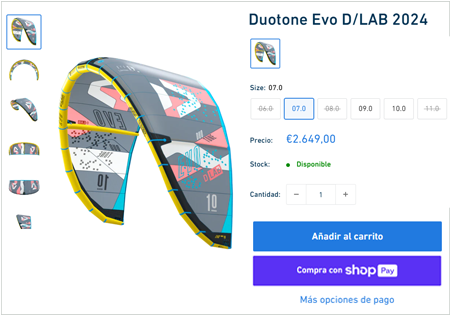
Thinking about two kites? Working out your kitesurf kite size