
CONTENTS
- Get trained and stay physically fit
- Weather conditions and safe zones
- Checking your gear and using the right equipment
- Respect zones and right-of-way rules
- Above all, safety and common sense
In recent years, kitesurfing has spread considerably, but to practise it you need to bear in mind some key tips for kitesurfing safely: the sea and the wind are unpredictable and uncontrollable, and the number of accidents has also multiplied, both for riders and for the people around them.
Even so, kitesurfing is a safe sport, and here we'll give you 5 key tips for kitesurfing confidently and safely.
Get trained and stay physically fit
The first key tip for kite safety is training. How well trained do you think you are in this sport? To start practising this sport it's very important to be trained and in good physical shape. It's advisable to learn the basics of the sport on a course run by a professional school that lets you learn and master the technique properly. From how to fit the footstraps on your kiteboard to knowing how much wind you need to kite.
We advise against practising and learning this sport on your own, because every wave is unique and having kitesurf training and knowledge will help us know how to act at every moment and in any situation. We also recommend being in good physical shape, because it will improve our reaction time so we can stay in control of the situation at all times.


As with all extreme sports, it's advisable to practise it with others or under someone else's supervision so that, in an emergency or if you're incapacitated, you can get outside help.

Weather conditions and safe zones
There are designated zones, away from swimming areas and breakwaters, where the sport is permitted and it's essential to respect them, since a gust of wind could be really dangerous for both the rider and nearby swimmers. It's also important to consider currents, rocky areas and the strength of the waves in order to assess the conditions in which we'll be practising our sport on the water, and whether the sea and the area are safe or not.

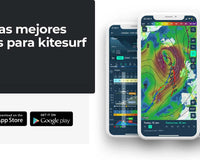
Before heading out to sea, it's very important to keep an eye on the weather conditions, which is why we advise you to install on your phone one of the best kitesurf apps currently available. Some of the best known are Windy, Windguru, etc.


In this case, the wind direction will also influence our decision about whether to go kitesurfing. It's always advisable to ride when the wind is blowing towards the shore, since otherwise it could drag us away from the shore. It's worth stressing that drifting away from the shore is very dangerous, because currents can carry us out to sea and adrift, where we won't be in control of the situation. With regard to the wind, it's also important to look for obstacle-free areas, that is, open areas where the beach is sandy rather than rocky, with no buildings or other obstacles that block the wind and create an enclosed zone with currents that could also drag us away.
Likewise, kitesurfing is not recommended in a thunderstorm, because kites attract lightning and it could be very dangerous.
Checking your gear and using the right equipment
Having suitable equipment will always be beneficial for kitesurfing, both to protect us in any fall and to be safer and better protected on the water. To this end, your equipment should ideally include a helmet, a buoyancy vest, an anemometer to measure wind speed, a wetsuit to prevent hypothermia if the water is cold, and neoprene booties if you're kitesurfing in rocky areas.

It's also essential to carry out the maintenance of our kitesurf gear: checking our equipment before going out to sea to make sure it's in perfect condition and suits the area and weather conditions where we'll be riding. For this, it's essential to have the board well waxed and free of any damage that could interrupt our session, and to do a kite check to make sure it's in good condition and isn't losing air anywhere.
Respect zones and right-of-way rules
It's important not to cross the lines of a moving kite, as they're made of a very strong material that can withstand up to 300 kilos and can be very sharp. So even if a perfect wave comes along, we won't take it if there's someone in the way we could run over. Likewise, we won't practise our sport when we're too close to other people, because we could endanger our own safety and that of others.

We should also bear in mind that, if we fall into the water, we'll protect our head with our arms to avoid being hit by our board or someone else's and, whenever possible, we'll try not to fall head first towards the bottom.
Above all, safety and common sense
The fifth and last of the key tips for kitesurfing safely is common sense. Seems obvious, right? You'd be surprised at the number of reckless things some enthusiasts have done.
You can see some videos on our Instagram. Having kitesurf insurance that suits our needs, for our safety and that of swimmers, is always a sign of reliability and, in the event of an accident, if you have insurance with the right cover, everything will be much easier and simpler.
You can see some videos on our Instagram. Having kitesurf insurance that suits our needs, for our safety and that of swimmers, is always a sign of reliability and, in the event of an accident, if you have insurance with the right cover, everything will be much easier and simpler.
If you follow these five key tips for kitesurfing, you'll be able to kitesurf in a much safer and more professional way, avoiding possible accidents and putting your safety and that of others at risk. So, what are you waiting for to get out on the water?